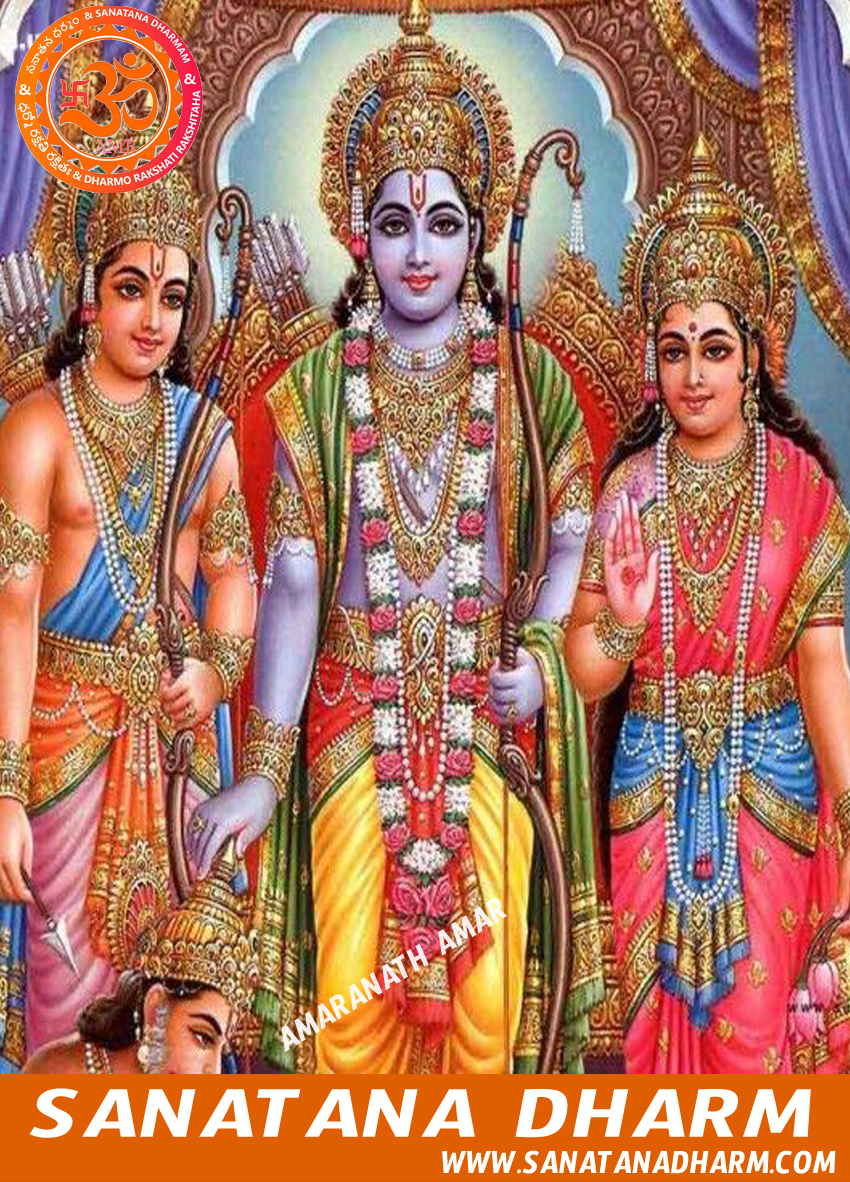
About the Ramayana :- The Ayodhya Kanda is the most emotionally powerful section of the Ramayana. As King Dasharatha prepares to crown Rama as heir, Queen Kaikeyi — influenced by her maid Manthara — invokes two ancient boons, demanding that Rama be exiled for 14 years and her own son Bharata be crowned instead. Rama accepts exile without a moment of hesitation, demonstrating perfect obedience and dharma. Sita and Lakshmana insist on accompanying him. The citizens of Ayodhya weep as the three depart for the forest. King Dasharatha dies of grief. When Bharata learns of these events, he rushes to the forest and begs Rama to return, but Rama refuses to break his father's word. Bharata takes Rama's sandals and places them on the throne, ruling as regent. This kanda teaches the supreme value of keeping one's word and the power of sacrifice.

Sanatana Dharm సనాతన ధర్మం  Sanatana Dharm సనాతన ధర్మం  Sanatana Dharm సనాతన ధర్మం
stroms English  Srimad Bhagavad Gita  Valmiki Ramayanam English

Valmiki Ramayanam - अयोध्याकाण्ड - Ayodhya Kanda


Ayodhya Kanda - Sarga 13 - 25v


Ayodhya Kanda – Sarga 13 · v1
अतदर्हं महाराजं शयानम् सयानमतथोचितम् |
ययातिमिव पुण्यान्ते देवलोकात्परिच्युतम् || २-१३-१
अनर्थरूपा सिद्धार्था ह्यभीता भयदर्शिनी |
पुनराकारयामास तमेव वरमङ्गना || २-१३-२

Dasaratha was not suitable for such an unfortunate condition nor was he habituated to such a situation. He was lying down on the floor, as king Yayati who fell down on earth fter exhausting his merit in the region of heaven. Kaikeyi who was a manifestation of worthlessness who accomplished her desire, who was fearlessly exhibiting her fearful form, asked for those boons again in a loud voice, to Dasaratha who was in such a bad mood situation.

यहाँ संस्कृत श्लोक का सरल हिंदी अनुवाद दिया गया है: महाराज को लेटे हुए देखकर, जो देवलोक से पतित ययाति के समान योग्य थे, वह स्त्री, जो सिद्धियों से युक्त, निर्भय और भय दिखाने वाली थी, उसने उसी वर को फिर से पुकारा।

Ayodhya Kanda – Sarga 13 · v2
त्वं कत्थसे महाराज सत्यवादी दृढव्रतः |
मम चेदं वरं कस्माद्विधारयितुमिच्छसि || २-१३-३

"Oh, king! You always boast yourself, saying "I speak truth. I am persisted in my promise." Now, why are you objecting to my boon?"

हे महाराज, आप स्वयं को सत्यवादी और दृढ़व्रती कहते हैं। फिर मेरी यह इच्छा आप क्यों पूरी नहीं करना चाहते?

Ayodhya Kanda – Sarga 13 · v3
एवमुक्तस्तु कैकेय्या राजा दशरथस्तदा |
प्रत्युवाच ततः क्रुद्धो मुहूर्तं विह्वलन्निव || २-१३-४

After thus spoken to by Kaikeyi, Dasaratha became angry, turned out delirious for a moment and again spoke as follows:

कैकेयी के ऐसा कहने पर राजा दशरथ तब क्रोधित होकर, कुछ क्षण विचलित से होकर बोले।

Ayodhya Kanda – Sarga 13 · v4
मृते मयि गते रामे वनं मनुजपुंगवे |
हन्त अनार्ये मम अमित्रे सकाम सुखिनी भव || २-१३-५

"Oh, the vulgar one! You, my enemy! You want to be happy after your desire is fulfilled when Rama the best among men leaves for the forest and when I die thereafter. Alas!"

जब मैं मर जाऊँ और हे राम, हे मनुज श्रेष्ठ, आप वन चले जाएँ, तब हे अनार्या, मेरी शत्रु, तुम सुख से रहो।

Ayodhya Kanda – Sarga 13 · v5
स्वर्गेऽपि खलु रामस्य कुशलं दैवतैरहम् |
प्रत्यादेशादभिहितं धारयिष्ये कथं बत || २-१३-६

"When celestials ask for me about Rama's well-being after I reach heaven, how can I indeed convince them that he is well obscuringly the actual fact?"

स्वर्ग में भी श्री राम की कुशलता के विषय में देवताओं से मुझे क्या कहना है। मैं इस अपमान को कैसे सहूंगा?

Ayodhya Kanda – Sarga 13 · v6
कैकेय्याः प्रियकामेन रामः प्रव्राजितो मया |
यदि सत्यं ब्रवीम्येतत्तस्त्यं भविष्यति || २-१३-७

"If I tell without obscuring the fact that I sent Rama to exile desirous of showing kindness to Kaikeyi, nobody will believe me."

कैकेयी के प्रिय काम (राम) को मैंने वनवास भेजा है। यदि मैं यह सच कह रहा हूँ, तो यह सत्य होगा।

Ayodhya Kanda – Sarga 13 · v7
अपुत्रेण मया पुत्रः श्रमेण महता महान् |
रामो लब्धो महाबाहुः स कथं त्यज्यते मया || २-१३-८

"With much effort I, the childless begot the great and powerful Rama as my son. How can I abandon such Rama?"

बिना पुत्र के मैंने बहुत परिश्रम से राम जैसे महान पुत्र को प्राप्त किया है। ऐसे पुत्र को मैं कैसे त्याग सकता हूँ?

Ayodhya Kanda – Sarga 13 · v8
शूरश्च कृतविद्यश्च जितक्रोधः क्षमापरः |
कथं कमलपत्राक्षो मया रामो विवास्यते || २-१३-९

"How can I send away Rama who is valiant and knowledgeable, who has subdued anger, who has forbearance and who has eyes like lotus-petals".

वह शूरवीर, विद्वान, जिसने क्रोध पर विजय पाई है और क्षमाशील है, ऐसे कमल जैसे नेत्रों वाले राम को मैं कैसे वन में भेज सकता हूँ?

Ayodhya Kanda – Sarga 13 · v9
कथमिन्दीवरश्यामं दीर्घबाहुं महाबलम् |
अभिराममहं रामं प्रेषयिष्यामि दण्डकान् || २-१३-१०

"How I can I send Rama, who is dark blue in colour like a blue lotus, who is long-armed , who is very strong and graceful, to Dandaka forest?"

मैं नीले कमल के समान श्याम वर्ण वाले, लम्बी भुजाओं वाले, अत्यंत बलवान और मनोहारी राम को दण्डकारण्य में कैसे भेज सकता हूँ?

Ayodhya Kanda – Sarga 13 · v10
सुखानामुचितस्यैव दुःखैरनुचितस्य च |
दुःखं नामानुपश्येयं कथं रामस्य धीमतः || २-१३-११

"Rama is accustomed to comforts. He is not accustomed to difficulties. How can I imagine such sensible Rama in a troublesome situation?"

सुखी और दुखी दोनों अवस्थाओं में, बुद्धिमान राम को दुःख का अनुभव कैसे हो सकता है? वे तो दोनों ही स्थितियों को समझते हैं।

Ayodhya Kanda – Sarga 13 · v11
यदि दुःखमकृत्वाद्य मम संक्रमणं भवेत् |
अदुःखार्हस्य रामस्य ततः सुखमवाप्नुयाम् || २-१३-१२

यदि आज मुझे बिना कष्ट के संक्रमण हो जाए, तो मैं, जो दुःख का पात्र नहीं हूँ, राम के समान सुख प्राप्त करूँगा।

Ayodhya Kanda – Sarga 13 · v12
नृशंसे पापसंकल्पे रामं स्त्यपराक्रमम् |
किं विप्रियेण कैकेयि प्रियं योजयसे मम || २-१३-१३
अकीर्तिरतुला लोके ध्रुवः परिभवश्च मे |

"Oh, cruel one! One with sinful thoughts! Oh, kaikeyi! why are you planning to do harm to Rama who is beloved to me and who is truly heroic? I shall certainly get unequalled ill fame and humiliation in this world".

हे कैकेयी, क्रूर और पापी संकल्प वाली तुम मेरे प्रिय राम को मुझसे क्यों दूर कर रही हो? इससे मुझे संसार में अपयश और निश्चित रूप से अपमान प्राप्त होगा।

Ayodhya Kanda – Sarga 13 · v13
तथा विलपतस्तस्य परिभ्रमित चेतसः || २-१३-१४
अस्तमभ्यगमत्सूर्यो रजनी चाभ्यवर्तत |

While Dasaratha was thus lamenting with his disturbed mind, there was approach of night with setting of the sun.

जब वह विलाप कर रहा था और उसका मन भ्रमित था, तब सूर्य अस्त हो गया और रात्रि आ गई।

Ayodhya Kanda – Sarga 13 · v14
सा त्रियामा तथार्तस्य चन्द्रमण्डलमण्डिता || २-१३-१५
राज्ञो विलपमानस्य न व्यभासत शर्वरी |

To Dasaratha, who was thus lamenting painfully, the night seemed to be dark even though it was adorned with charming circular moon.

वह रात्रि, जो उस राजा के विलाप के कारण, चंद्रमा के मंडल से सुशोभित होने पर भी, उसे अच्छी नहीं लगी।

Ayodhya Kanda – Sarga 13 · v15
तथैवोष्णम् विनिःश्वस्य वृद्धो दसरथो नृपः || २-१३-१६
विललापार्तवद्दुःखं गगनासक्तलोचनः |

The aged Dasaratha was lamenting painfully as though afflicted with a disease, with lot and hard breaths, having his eyes fixed on the sky.

वृद्ध राजा दशरथ ने उसी प्रकार गरम साँसें छोड़ते हुए, जैसे कोई दुखी व्यक्ति रोता है, आकाश की ओर आँखें लगाए विलाप किया।

Ayodhya Kanda – Sarga 13 · v16
प्रभातं त्वयेच्छामि निशे नक्षत्रभूषणे || २-१३-१७
क्रियतां मे दया भद्रे मयायं रचितोऽञ्जलिः |

"Oh, auspicious night, decorated with stars! do not wish you to do break into a dawn. Have mercy on me. I pray with folded hands."

हे नक्षत्रों से सुशोभित रात्रि, मैं प्रभात की कामना करता हूँ। मुझ पर दया करो, हे भद्रे, मैंने यह हाथ जोड़कर प्रार्थना की है।

Ayodhya Kanda – Sarga 13 · v17
अथवा गम्यतां शीघ्रं नाहमिच्छामि निर्घृणाम् || २-१३-१८
नृशंसां कैकेयीं द्रष्टुं यत्कृते व्यसनं महत् |

"Otherwise, Oh, Night! Leave away quickly. I do not went to see Kaikeyi, who is shameless, cruel and for whose reason this great calamity occurred"

अथवा शीघ्र ही चली जाइए, क्योंकि मैं निर्दयी कैकेयी को देखना नहीं चाहती, जिसके कारण यह बड़ा संकट आया है।

Ayodhya Kanda – Sarga 13 · v18
एवमुक्त्वा ततो राजा कैकेयीं संयताञ्जलिः || २-१३-१९
प्रसादयामास पुनः कैकेयीं चेदमब्रवीत् |

The king spoke like this and beseeched kaikeyi with folded hands. He again spoke this word to Kaikeyi.

राजा ने कैकेयी से ऐसा कहकर, हाथ जोड़कर उन्हें प्रसन्न करने का प्रयास किया और फिर यह कहा।

Ayodhya Kanda – Sarga 13 · v19
साधुवृत्तस्य दीनस्य त्वद्गतस्य गतायुषः | २-१३-२०
प्रसादः क्रियतां देवि भद्रे राज्ञो विशेषतः |

"Oh, auspicious queen! I am a well conducted man. I am dejected and seeking refuse in you. I am an old man and especially a king. Be kind to me."

हे देवी भद्रे, साधु स्वभाव वाले, दीन, आप पर आश्रित और मरणासन्न राजा पर विशेष कृपा करें।

Ayodhya Kanda – Sarga 13 · v20
शून्ये न खलु सुश्रोणि मयेदं समुदाहृतम् || २-१३-२१
कुरु साधु प्रसादं मे बाले सहृदया ह्यसि |

"Oh, well-hipped one! I hope that whatever I told, has not merged in the sky. Oh! young woman, be kind to me . You are good-hearted."

हे सुश्रोणि, मैंने यह बात व्यर्थ नहीं कही है। हे बाले, तुम हृदय से दयालु हो, मुझ पर प्रसन्न हो जाओ।

Ayodhya Kanda – Sarga 13 · v21
प्रसीद देवि रामो मे त्वद्धत्तं राज्यमव्ययम् || २-१३-२२
लभतामसितापाङ्गे यशः परमवाप्नुहि |

"Oh, queen with dark outer corner of eyes be kind. You your self give my kingdom to Rama. Thus, you will obtain great fame."

हे देवी, प्रसन्न होइए। मेरे राम को आपका दिया हुआ यह अविनाशी राज्य प्राप्त हो। हे असिताङ्गी (काले नेत्रों वाली), वे परम यश प्राप्त करें।

Ayodhya Kanda – Sarga 13 · v22
मम रामस्य लोकस्य गुरूणां भरतस्य च || २-१३-२३
प्रियमेतद्गुरुश्रोणि कुरु चारुमुखेक्षणे |

"Oh, broad hipped, with beautiful face and eyes! do this. It will be pleasing to me, to Rama, to the world, to priests and to Bharata."

हे सुंदर मुख और आँखों वाली, गुरुओं में श्रेष्ठ मेरे प्रिय राम और भरत के लिए यह कार्य करो।

Ayodhya Kanda – Sarga 13 · v23
विशुद्धभावस्य सु ुष्टभावा | दीनस्य ताम्राश्रुकलस्य राज्ञः |
श्रुत्वा विचित्रं करुणं विलापं | भर्तुर्नृशंसा न चकार वाक्यम् || २-१३-२४

Hearing the king, who was her pure-hearted husband and who was pitifully lamenting strangely with red eyes filled with tears, that bad tempered cruel woman did not follow his words.

यहाँ संस्कृत श्लोक का सरल हिंदी अनुवाद दिया गया है: दुष्टों ने उस दीन राजा के विचित्र और करुण विलाप को सुनकर भी, जो आँसुओं से भरा था, कुछ नहीं कहा।

Ayodhya Kanda – Sarga 13 · v24
ततः स राजा पुनरेव मूर्छितः |
प्रियामतुष्टां प्रतिकूलभाषिणीम् |
समीक्ष्य पुत्रस्य विवासनम् प्रति |
क्षितौ विसंज्ञो निपपात दुःखितः || २-१३-२५

Seeing his discontented wife talking unpleasantly about sending Rama to forest, that king was distressed, fainted again and fell down unconscious on the floor.

तब वह राजा अपनी अप्रसन्न और प्रतिकूल बोलने वाली प्रिय पत्नी को देखकर, और पुत्र के वनवास का विचार करके, अत्यंत दुखी होकर मूर्छित होकर पृथ्वी पर गिर पड़ा।

Ayodhya Kanda – Sarga 13 · v25
इतीव राज्ञो व्यथितस्य सा निशा |
जगाम घोरं श्वसतो मनस्विनः |
विबोध्यमानः प्रतिबोधनं तदा |
निवारयामास स राजसत्तमः || २-१३-२६

While the distressed and self-respected king was sighing terribly in the way, that night came to an end. In the dawn, bards and singers started to awaken him. But the excellent king prevented them to do.

राजा, जो उस रात बहुत व्यथित थे, गहरी नींद में सो गए। बार-बार जगाए जाने पर भी, उन्होंने उस महान राजा ने उस जागरण को स्वीकार नहीं किया।



ramayanam Questions and Answers

Valmiki Ramayanam


Valmiki Ramayanam

www.sanatanadharm.com - play store app (sanatana dharm)  

"Bharathiya Sanatana Dharmam" and Sanatana Dharm & Dharmo rakshati Rakshitha logo are our trademarks. Unauthorised use of "Sanatana Dharmam & Dharmo rakshati Rakshitha" and the logo is not allowed. Copyright © sanatanadharm.com All Rights Reserved . Made in India.